8
0
Support the library.
Your support helps keep books free for everyone ❤️
📍 Noticed
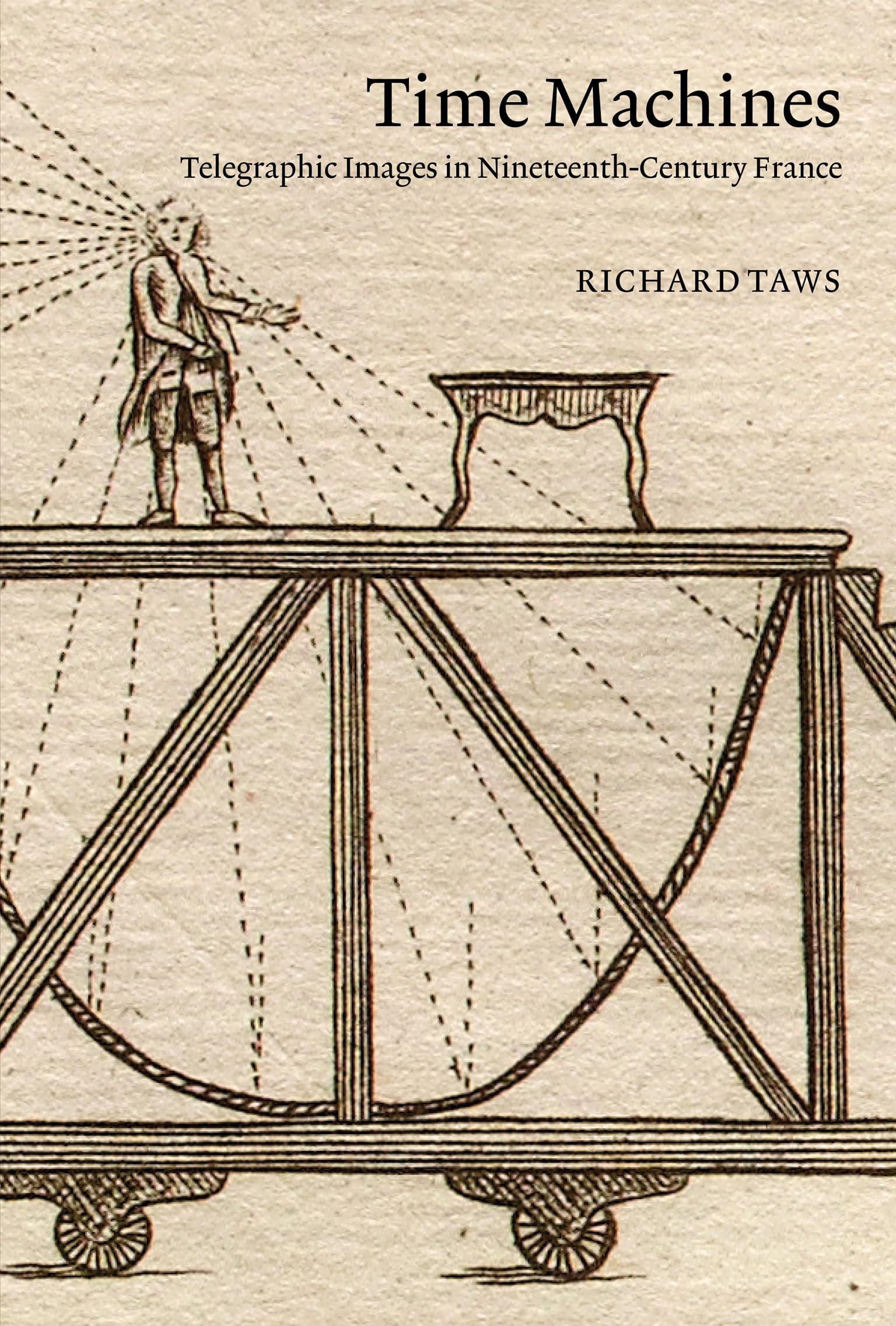
Time Machines: Telegraphic Images in Nineteenth-Century France
by Richard Taws
Sponsored
Synopsis
A riveting exploration of the relationship between art and telegraphy, and its implications for understanding time and history in nineteenth-century France.
In Time Machines Richard Taws examines the relationship between art and telegraphy in the decades following the French Revolution. The optical ...
In Time Machines Richard Taws examines the relationship between art and telegraphy in the decades following the French Revolution. The optical ...
A riveting exploration of the relationship between art and telegraphy, and its implications for understanding time and history in nineteenth-century France.
In Time Machines Richard Taws examines the relationship between art and telegraphy in the decades following the French Revolution. The optical telegraph was a novel form of visual communication developed in the 1790s that remained in use until the mid-1850s. This pre-electric telegraph, based on a semaphore code, irrevocably changed the media landscape of nineteenth-century France. Although now largely forgotten, in its day it covered vast distances and changed the way people thought about time. It also shaped, and was shaped by, a proliferating world of images. What happens, Taws asks, if we think about art telegraphically?
Placed on prominent buildings across France—for several years there was one on top of the Louvre—the telegraph’s waving limbs were a ubiquitous sight, shifting how public space was experienced and represented. The system was depicted by a wide range of artists, who were variously amused, appalled, irritated, or seduced by the telegraph’s intractable coded messages and the uncanny environmental and perceptual disruption it caused. Clouds, architecture, landscapes, and gestures: all signified differently in the era of telegraphy, and the telegraph became a powerful means to comprehend France’s technological and political past. While Paris’s famous arcades began to crisscross the city at ground level, a more enigmatic network was operating above. Shifting attention from the streets to the skies, this book shows how modern France took shape quite literally under the telegraph’s sign.
You May Also Like

Bone Dry (A Blanco County Mystery #2)
Ben Rehder

Summary of License to be Bad: How Economics Corrupted Us By Jonathan Aldred
BestPrint

Vanished Beyond the Map: The Mystery of Lost Explorer Hubert Darrell
Adam Shoalts

The Bible in my desk
Tylia L. Flores

The Amazing Village Creator: Slow Living with the Village Building Cheat Skill #050 (The Amazing Village Creator: Slow Living with the Village Building Cheat Skill Chapter Serials Book 50)
Shichio Kuzu

The Lamplighters
Emma Stonex
Non Fiction Picks
View All
Being Jewish After the Destruction of Gaza: A Reckoning
Peter Beinart

Poverty, by America
Matthew Desmond

The Great Resistance: The 400-Year Fight to End Slavery in the Americas
Carrie Gibson

The Book of Hope: A Survival Guide for Trying Times
Jane Goodall

We Will Rise Again: Speculative Stories and Essays on Protest Resistance and Hope
Karen Lord

We Will Be Jaguars: A Memoir of My People
Nemonte Nenquimo
