0
0
Support the library.
Your support helps keep books free for everyone ❤️
📍 Noticed
Thoughts on Our Daily Prayers: A Commentary on the Siddur
by Heshey Zelcer
Sponsored
Synopsis
The destruction of the Second Temple in 70 CE brought with it the end of a centralized mode of worship. For the Jewish people there was no longer a Temple with priests to serve as their proxy in the daily worship of Hashem. Gone was the glorious Temple and gone too were the daily sacrifices through ...
The destruction of the Second Temple in 70 CE brought with it the end of a centralized mode of worship. For the Jewish people there was no longer a Temple with priests to serve as their proxy in the daily worship of Hashem. Gone was the glorious Temple and gone too were the daily sacrifices through which Jewish people throughout the world participated vicariously with their yearly half-shekel contribution. In the absence of a representative worship centered around the Temple, a different type of worship evolved, centered around individuals praying in communities of ten or more men. The Siddur text embodies our prayers and continues to evolve. Jews throughout the world use it to express their acceptance of Hashem as their God, and to give voice to their pain and thanksgiving, their fear and their longing, their hope for better days to come. Two segments of our prayers are central to our daily worship. The first, our twice-daily-recited Kriat Shema and its berakhot, expresses our kabbalat ol malkhut Shamayim, our accepting the yoke of Heaven. The second, the thrice-daily Shemoneh Esreh, is patterned after the Korban Tamid, the daily sacrifices of the Temple. With the Shemoneh Esreh we praise Hashem and petition Him for our daily needs. Appended to these two components are various prayers and praises of God collected from Tanakh (mostly Psalms), as well as from other sources which were formulated by our great sages and poets throughout the past two millennia. The divrei Torah you find here address different parts of davening and are arranged to follow our cycle of prayer. For each, an introduction is provided, a question is raised, an answer is proposed, and a takeaway idea—whether moral, ethical or religious—is suggested. We remind the reader that while the questions raised are always truthful, the answers may be mere conjecture. Footnotes provide the readers with the original rabbinic Hebrew sources allowing the reader to delve deeper into the subjects discussed and to experience the rhythm and nuance of the original sources. Sometimes a d’var Torah is a summary of a much longer article originally published in Ḥakirah. The interested reader may access the original article at www.Hakirah.org. The questions and answers presented are not necessarily novel ideas. We have tried to ascribe the questions posed and the answers provided to those who originally formulated them. When a question or an answer is presented anonymously it is not necessarily an original idea. The mind is weak, and while the concept was remembered, the source and its author may have been forgotten. I beg forgiveness from the reader for these lapses. As a young adult I purchased a copy of Barukh Tefillot Ha-Shanah by R. Barukh ha-Levi Epstein, HY”D (1860–1941), who is also the author of the very popular Torah Temimah commentary on Ḥumash. Throughout my years of adulthood, Barukh She-Amar has been for me a primary source for insights into the Siddur; a mainstay that has helped enhance my prayers. I have never found a commentary on the Siddur which surpasses it in its scope of questions, the originality of its answers, and the lucidity of its rabbinic Hebrew. Many of the questions raised in our divrei Torah were taken from Barukh She-Amar. Often, we evaluate his answers and propose alternate solutions. In a sense, this work is a supercommentary on Barukh She-Amar. I strongly recommend to anyone who wishes to delve deeper into the beauty of our Siddur to acquire a copy of Barukh Tefillot Ha-Shanah. We reference a wide range of sources in the ideas we present, but in our halakhic background (especially in our discussions of Kaddish) we tend to emphasize the words of Arukh Ha-Shulḥan—compiled by R.
You May Also Like

The Turing Protocol: A Novel
Nick Croydon
![The Banished Villainess' Husband [Vol.3]](https://m.media-amazon.com/images/I/91cfLGvnu9L.jpg)
The Banished Villainess' Husband [Vol.3]
Kiri Komori

Ultimate Cedar Cove Collection: 16 Lighthouse Road / 204 Rosewood Lane / 311 Pelican Court ... Yakima Street / 1225 Christmas Tree Lane
Debbie Macomber

The Portable Thoreau
Henry David Thoreau

Feed These People: Slam-Dunk Recipes for Your Crew
Jen Hatmaker
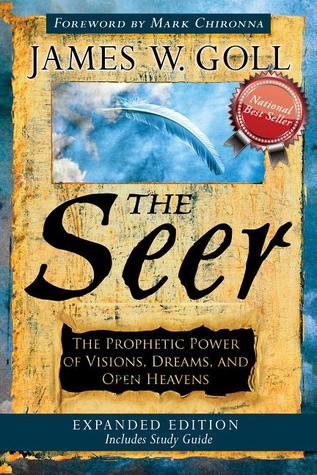
The Seer Expanded Edition: The Prophetic Power of Visions, Dreams and Open Heavens
James W. Goll