0
0
Support keeps this going.
If you find value here, a small tip makes a big difference ❤️
📍 Noticed
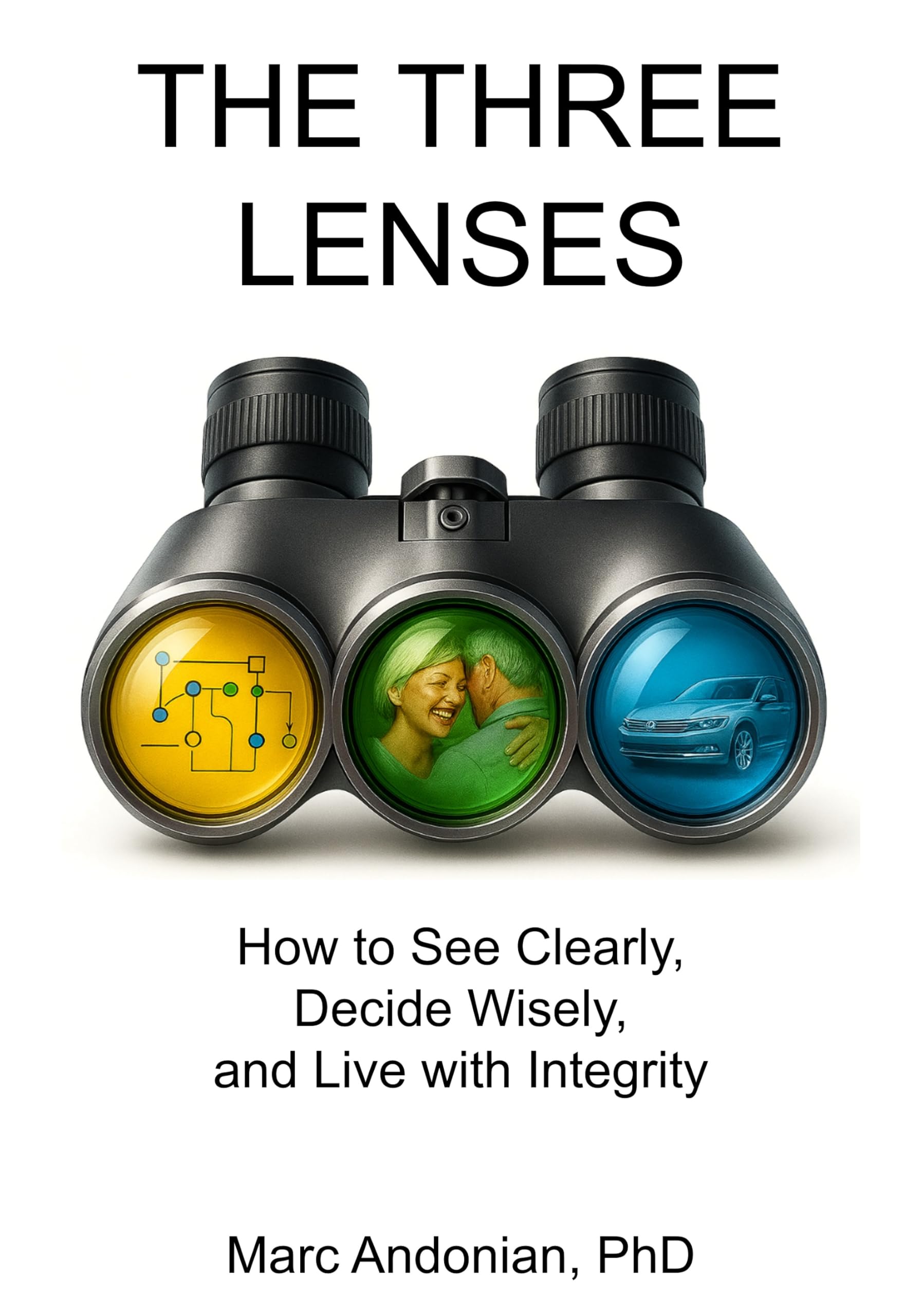
THE THREE LENSES: How to See Clearly, Decide Wisely, and Live with Integrity
by Marc Andonian
Sponsored
Synopsis
What if your hardest decisions aren't actually dilemmas—but invitations to see more completely?
Every leader, professional, and parent faces moments that feel impossible: situations where compassion seems to conflict with accountability, where individual needs clash with organizational fairness, ...
Every leader, professional, and parent faces moments that feel impossible: situations where compassion seems to conflict with accountability, where individual needs clash with organizational fairness, ...
What if your hardest decisions aren't actually dilemmas—but invitations to see more completely?
Every leader, professional, and parent faces moments that feel impossible: situations where compassion seems to conflict with accountability, where individual needs clash with organizational fairness, or where achieving results appears to require sacrificing principles. We tell ourselves we must choose—but what if the real problem is that we're only seeing part of the picture?
The Three Lenses introduces a powerful framework based on philosopher Robert S. Hartman's science of value—a framework that reveals why smart people with good intentions keep creating outcomes they never wanted, and how to transform the way you see, decide, and lead.
The Three Dimensions of Value:
Human value operates through three distinct lenses, and most of us unconsciously privilege one while neglecting the others:
Intrinsic Value – The irreplaceable, infinite worth of each unique person
Extrinsic Value – The meaningful results and performance we create together
Systemic Value – The fair principles, standards, and rules that guide us
When we fragment these dimensions—prioritizing results while sacrificing people, or maintaining rigid rules without regard for context, or honoring individual dignity while avoiding necessary accountability—we create predictable dysfunction in our organizations, relationships, and lives.
What You'll Learn:
Through a combination of philosophical depth, practical application, and real-world examples, this book teaches you to:
Recognize your default lens and understand what you're systematically missing
Identify value conflicts before they become destructive organizational battles
Develop "trinocular vision"—the capacity to hold all three dimensions simultaneously
Design integrated solutions that honor dignity, achieve results, and maintain fairness
Navigate ambiguity with wisdom rather than anxiety
Lead with integrity across all three value dimensions
Why This Matters Now:
In an era of increasing complexity, polarization, and competing demands, leaders can no longer afford single-lens thinking. The organizations, families, and communities that will thrive aren't those that choose between people and performance, between principles and adaptation, between compassion and accountability—they're the ones that learn to integrate all three.
This book is for you if:
You're exhausted from feeling forced to choose between values that shouldn't conflict
You lead people and want to honor both their dignity and necessary results
You're navigating organizational change and need to maintain trust while driving transformation
You're a parent balancing individual kids' needs with family fairness
You make decisions that affect others and want to ensure you're seeing the whole picture
You're committed to developing wisdom, not just accumulating techniques
What Makes This Different:
Unlike leadership books that offer simple formulas or one-size-fits-all solutions, The Three Lenses equips you with a diagnostic framework that helps you understand the structure of complexity itself. You won't just learn what to do—you'll develop the capacity to see what others miss.
This isn't about adding more to your plate. It's about finally seeing clearly what's already there—and making decisions you won't regret.
The path to integrated wisdom begins with a single question: Which lens am I using right now—and what am I not seeing?
Answer that question consistently, and everything changes.
You May Also Like