10
0
Support the library.
Your support helps keep books free for everyone ❤️
📍 Noticed
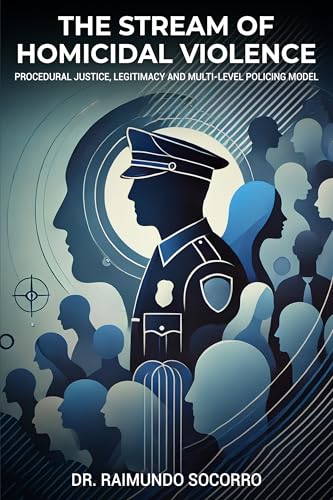
The Stream of Homicidal Violence: Procedural Justice, Legitimacy and Multi-Level Policing Model
by Dr. Raimundo Socorro
Sponsored
Synopsis
With over 28 years of experience as a police executive, Dr. Raimundo Socorro has become a transformative leader in redefining modern policing. Early in his career, he was driven by a "crime control" mission, determined to arrest and convict offenders at all costs. However, over time, he discovered ...
With over 28 years of experience as a police executive, Dr. Raimundo Socorro has become a transformative leader in redefining modern policing. Early in his career, he was driven by a "crime control" mission, determined to arrest and convict offenders at all costs. However, over time, he discovered a more humane, effective approach-one rooted in Procedural Justice.
While earning his Ph.D. in Leadership, Dr. Socorro deepened his understanding of this method, which emphasizes fairness, transparency, and community engagement. As Dean of the School of Justice at Miami Dade College, he has spearheaded efforts to recalibrate police training, integrating Procedural Justice principles into the academy's curriculum to address the shortcomings of traditional reactive and paramilitary policing models.
Dr. Socorro challenges the outdated "crime control" approach, particularly its reliance on excessive force and its disproportionate impact on minority communities. He introduces a new vision: policing that integrates into the "stream" of community life rather than standing on the sidelines. By understanding the structural and cultural forces that contribute to violence, law enforcement can become active participants in community conflict resolution.
Central to this vision are strategies like focused deterrence and the use of violence interrupters-locally trusted individuals who mediate conflicts at the grassroots level. These efforts create respectful dialogue between law enforcement and communities, breaking down barriers and fostering collaboration.
Procedural Justice prioritizes legitimacy through public trust, emphasizing the importance of fair treatment, impartiality, and transparency. Its core principles-giving the public and offenders a voice, ensuring fairness, demonstrating neutrality, and maintaining transparency-offer a pathway to rebuilding relationships between police and the communities they serve.
You May Also Like

The Social Life of DNA: Race, Reparations, and Reconciliation After the Genome
Alondra Nelson

Be Brave Little One: An Inspiring Book About Courage For Babies, Baby Showers, Graduation, And More
Marianne Richmond

Operation Ivy Bells: A Mac McDowell Mission Vol 1 (The Mac McDowell Missions)
Robert G. Williscroft

Eat, Drink, and Remarry: Memories from a Lifetime of Art, Class, and Southern Charm
Patricia Altschul

Last Seen
Christopher Castellani

Ariel's Gift: Ted Hughes, Sylvia Plath, and the Story of Birthday Letters
Erica Wagner