1
0
Support the library.
Your support helps keep books free for everyone ❤️
📍 Noticed
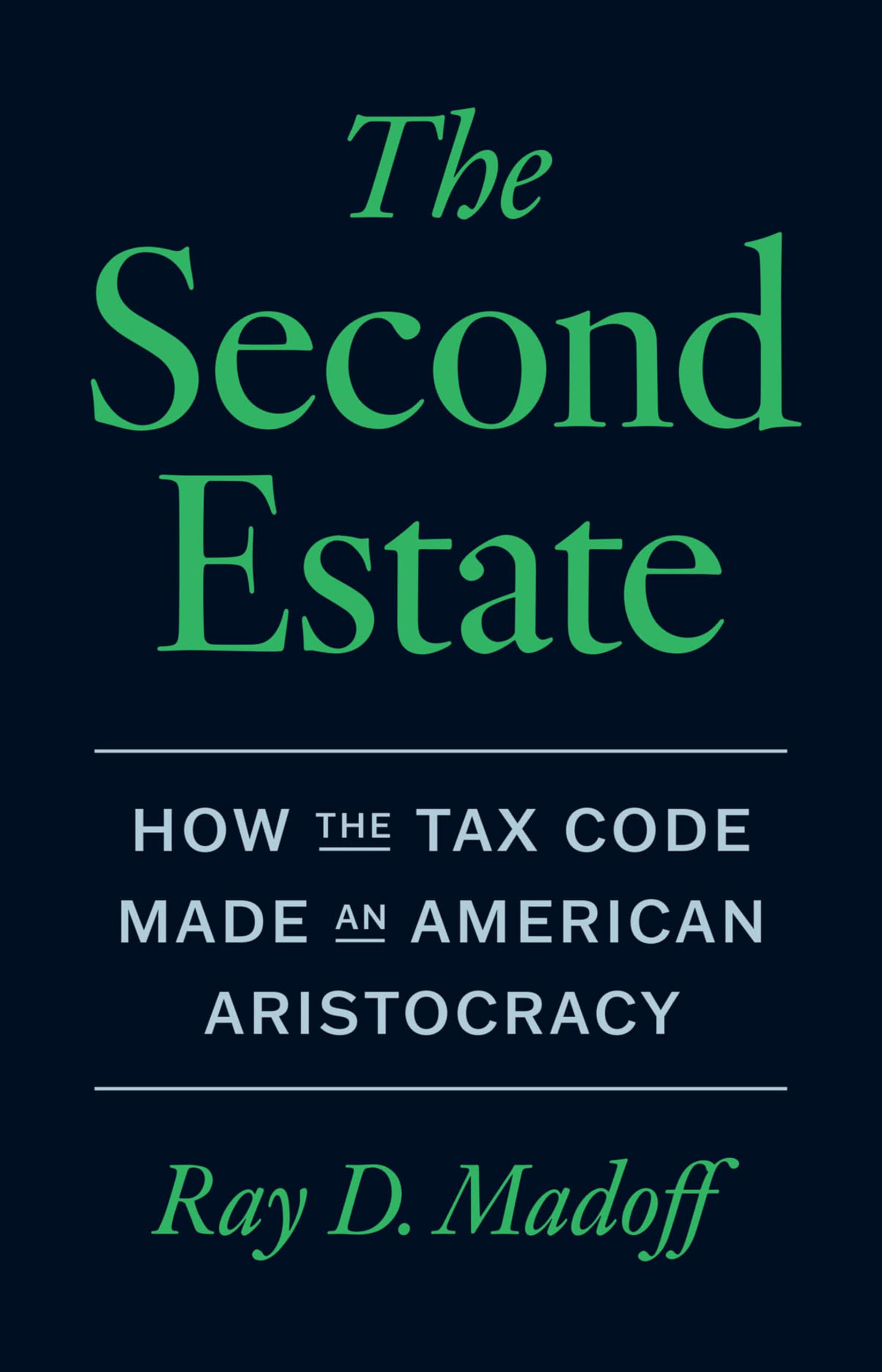
The Second Estate: How the Tax Code Made an American Aristocracy
by Ray D. Madoff
Sponsored
Synopsis
A revelatory book that lifts the curtain on America’s most consequential public deception: how the rich get richer using tools the government gave them.
Amid conflicting narratives about the drivers of wealth and inequality in the United States, one constant hovers in the background: the US tax ...
Amid conflicting narratives about the drivers of wealth and inequality in the United States, one constant hovers in the background: the US tax ...
A revelatory book that lifts the curtain on America’s most consequential public deception: how the rich get richer using tools the government gave them.
Amid conflicting narratives about the drivers of wealth and inequality in the United States, one constant hovers in the background: the US tax code. No political force has been more consequential—or more utterly opaque—than the 7,000-page document that details who pays what in American society and government. Most of us have a sense that it’s an unfair system. But does anyone know exactly how it’s unfair?
Legal scholar Ray D. Madoff knows. In The Second Estate, she offers an unprecedented look behind the scenes of America’s byzantine system of taxation, laying bare not only its capacity to consolidate wealth but also the mechanisms by which it has created two fundamentally separate American societies: the working Americans who pay and the ultra-rich who benefit.
This is not a story of offshore accounts or secret tax havens. In The Second Estate, Madoff shows that the US system itself has, over time, been stripped and reconstituted such that it now offers a series of secret paths, hidden in plain sight, for wealthy people in the know to avoid taxation altogether. Through the strategic avoidance of traditional income, leveraging of investments and debt, and exploitation of rules designed to promote charitable giving, America’s wealthy do more than just pay less than their share; they remove themselves from the tax system entirely. Wealth becomes its own sovereign state, and the living is surprisingly—and maddeningly—cheap.
You May Also Like

Painting and Drawing in Waldorf Schools: Classes 1 to 8
Thomas Wildgruber
Shakoree's AMC MCQ Recalls & notes 2025 ( Book-32 ): MCQs 1551-1600
Omar Shakoree

Dream State
Eric Puchner

The Art of Spending Money: Simple Choices for a Richer Life
Morgan Housel

Shoot Your Shot (New England Bay Sharks Book 2)
Hannah Gray

All the Colors of the Dark
Chris Whitaker
Non Fiction Picks
View All
La Nuit au cœur
Nathacha Appanah

The Art Thief: A True Story of Love, Crime, and a Dangerous Obsession
Michael Finkel

Exit Stalin: The Soviet Union as a Civilization, 1953-1991
Mark B. Smith
Unreasonable Hospitality: The Remarkable Power of Giving People More Than They Expect
Will Guidara

The Oak and the Larch: A Forest History of Russia and Its Empires
Sophie Pinkham

A Fever in the Heartland: The Ku Klux Klan's Plot to Take Over America, and the Woman Who Stopped Them
Timothy Egan
