0
0
Support the library.
Your support helps keep books free for everyone ❤️
📍 Noticed
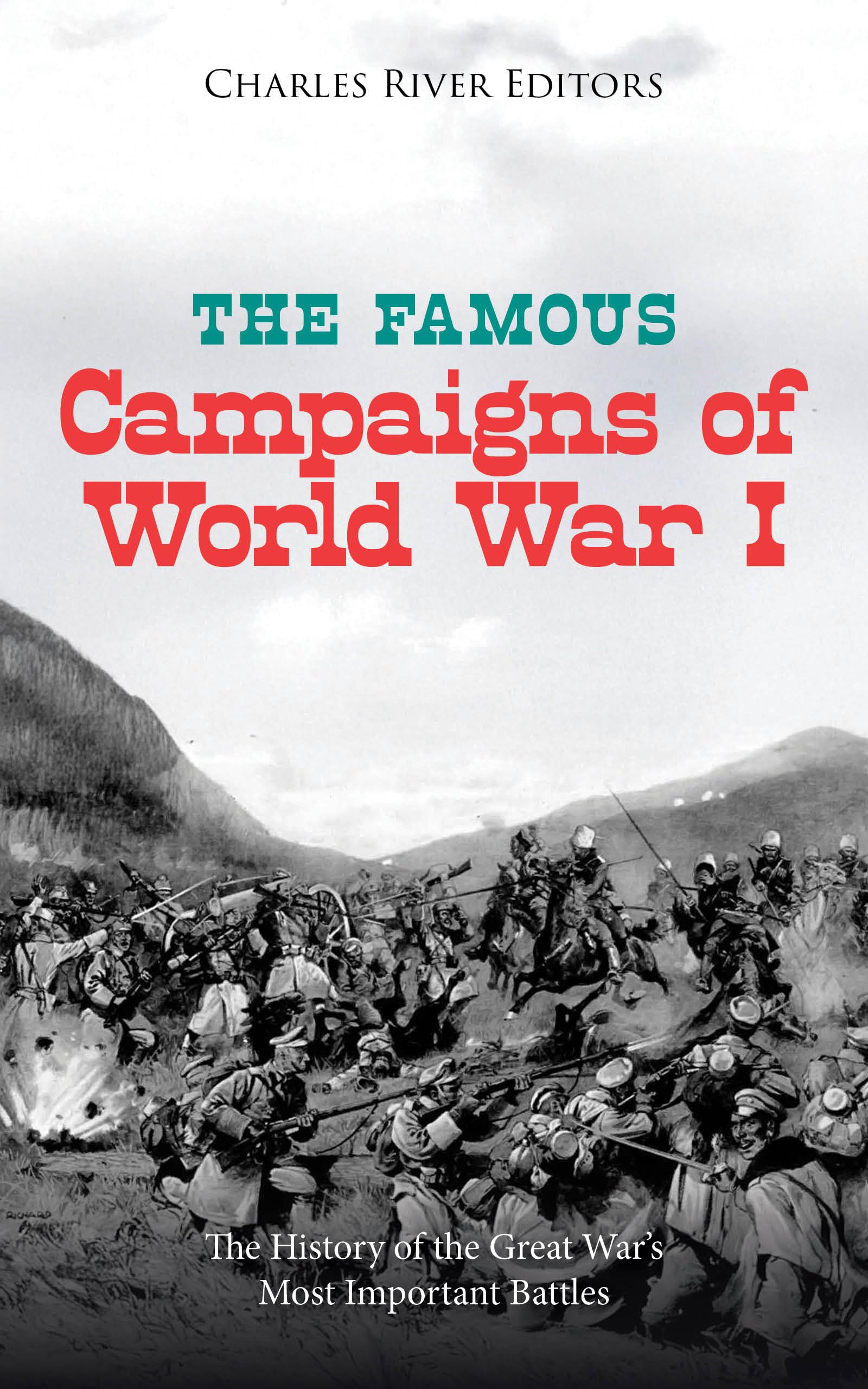
The Famous Campaigns of World War I: The History of the Great War’s Most Important Battles
by Charles River Editors
Sponsored
Synopsis
World War I, also known in its time as the “Great War” or the “War to End all Wars”, was an unprecedented holocaust in terms of its sheer scale. Fought by men who hailed from all corners of the globe, it saw millions of soldiers do battle in brutal assaults of attrition which dragged on for ...
World War I, also known in its time as the “Great War” or the “War to End all Wars”, was an unprecedented holocaust in terms of its sheer scale. Fought by men who hailed from all corners of the globe, it saw millions of soldiers do battle in brutal assaults of attrition which dragged on for months with little to no respite. Tens of millions of artillery shells and untold hundreds of millions of rifle and machine gun bullets were fired in a conflict that demonstrated man’s capacity to kill each other on a heretofore unprecedented scale, and as always, such a war brought about technological innovation at a rate that made the boom of the Industrial Revolution seem stagnant.
The enduring image of World War I is of men stuck in muddy trenches, and of vast armies deadlocked in a fight neither could win. It was a war of barbed wire, poison gas, and horrific losses as officers led their troops on mass charges across No Man’s Land and into a hail of bullets. While these impressions are all too true, they hide the fact that trench warfare was dynamic and constantly evolving throughout the war as all armies struggled to find a way to break through the opposing lines.
The arms race before the war and the attempt to break the deadlock of the Western and Eastern Fronts by any means possible changed the face of battle in ways that would have previously been deemed unthinkable. Before 1914, flying machines were objects of public curiosity; the first flights of any account on rotor aircraft had been made less than 5 years before and were considered to be the province of daredevils and lunatics. By 1918, all the great powers were fielding squadrons of fighting aircraft armed with machine guns and bombs, to say nothing of light reconnaissance planes. Tanks, a common feature on the battlefield by 1918, had not previously existed outside of the realm of science fiction stories written by authors like H.G. Wells. Machine guns had gone from being heavy, cumbersome pieces with elaborate water-cooling systems to single-man-portable, magazine-fed affairs like the Chauchat, the Lewis Gun and the M1918 BAR. To these grim innovations were added flamethrowers, hand grenades, zeppelins, observation balloons, poison gas, and other improvements or inventions that revolutionized the face of warfare.
These technological developments led to an imbalance. Before the introduction of the man-portable light machine gun (which took place in the second half of the war), not to mention tanks (which also joined the fight late in the game), defensive firepower vastly outweighed offensive capability. Massed batteries of artillery, emplaced heavy machine guns, barbed wire entanglements, and bewildering fortifications meant that ground could not be taken except at incredible cost. This led to the (somewhat unjustified) criticism famously leveled at the generals of World War I that their soldiers were “lions led by donkeys”. Certainly, every army that fought in the Great War had its share of officers, at all levels of command, who were incompetent, unsuitable, foolish, or just plain stupid, but there were plenty of seasoned professionals who understood their job and did it well. The main problem facing commanders in the war was that there was such a bewildering array of new armaments, with such vast destructive potential, that previous military doctrines were virtually useless. Cavalry, which had been expected to play a major role both as reconnaissance and as “mounted infantry”, operating in much the same way as airborne and mechanized troops would later to rapidly outflank enemy positions, quickly proved useless. Frontal infantry assaults were cut to shreds by enemy defensive fire, but there seemed to be no major alternative. Ground had to be taken, even if at great cost, and to do so, more destructive weapons were devised, tested and deployed.
You May Also Like
Ask the Dust
John Fante
Unabridged: The Thrill of (and Threat to) the Modern Dictionary
Stefan Fatsis

The Two Jacks: The Amazing Adventures of Major Jack M. Veness and Major Jack L. Fairweather
Will R. Bird

First 100 Padded: Nature Words
Roger Priddy

Benedict Cumberbatch Reads Sherlock Holmes' Rediscovered Railway Mysteries & Other Stories
John Taylor

Battle Lines: A Graphic History of the Civil War
Jonathan Fetter-Vorm
![呪術廻戦 16 [Jujutsu Kaisen 16]](https://m.media-amazon.com/images/S/compressed.photo.goodreads.com/books/1622650897i/56894055.jpg)


