0
0
Support the library.
Your support helps keep books free for everyone ❤️
📍 Noticed
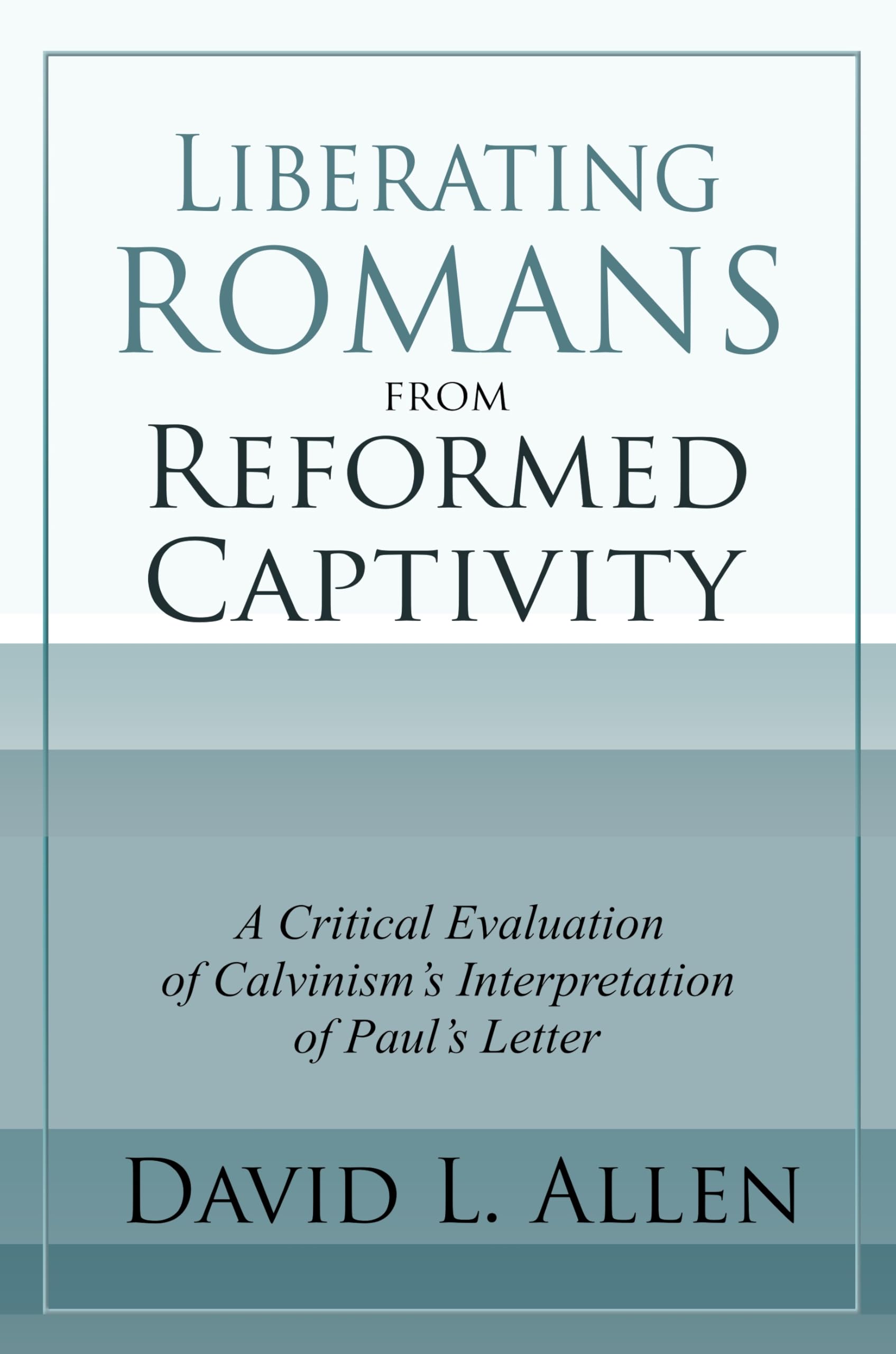
Liberating Romans from Reformed Captivity: A Critical Evaluation of Calvinism’s Interpretation of Paul’s Letter
by David L. Allen
Sponsored
Synopsis
The question of Jew-Gentile relations in God’s redemptive plan has been a focal point in Pauline scholarship for over five decades. What implications does this understanding have for traditional Reformed interpretations of Romans?
Liberating Romans from Reformed Captivity builds upon Dr. David L. ...
Liberating Romans from Reformed Captivity builds upon Dr. David L. ...
The question of Jew-Gentile relations in God’s redemptive plan has been a focal point in Pauline scholarship for over five decades. What implications does this understanding have for traditional Reformed interpretations of Romans?
Liberating Romans from Reformed Captivity builds upon Dr. David L. Allen’s earlier work, To the Jew First: Two-Part Romans, A Structural Game Changer? (Legacy Ink, October 2024) where he presented linguistic and structural evidence supporting the thesis that Paul composed Romans 1–8 primarily for Jewish believers while Romans 9–16 targeted Gentile believers. Paul sought reconciliation between these two groups within the Roman church. This interpretive lens raises a key theological question: How should this Jew-Gentile dynamic shape our understanding of Romans—especially in relation to traditional Reformed theology, which has long viewed Romans as a cornerstone text?
It is well documented that Romans profoundly influenced Augustine’s soteriology, especially his doctrines of predestination, divine determinism, and the nature of human free will. This raises a central concern: To what extent should Augustine’s reading of Romans be accepted, particularly when judged against the theological and rhetorical priorities evident within the epistle itself?
Liberating Romans from Reformed Captivity offers a sustained critique of the theological framework of Calvinism, beginning with its roots in Augustine’s interpretation of Romans. Paul’s letter will serve as the primary matrix through which we investigate whether the Reformed reading of Romans is exegetically and theologically defensible. Given Romans’ centrality to Reformed theology, the burden of proof rests with Calvinism to show that its reading can withstand scrutiny. Without Romans, Calvinism loses its principal foundation and struggles to stand.
The critique will focus on the core doctrinal tenets of Calvinism as they are commonly derived from Romans: total depravity, unconditional election, predestination, reprobation, limited atonement, irresistible grace, the perseverance of the saints, and supersessionism (also known as Replacement Theology). Additionally, we will explore how Augustine’s debates with Pelagius—and the emergence of Pelagianism—profoundly shaped his later theology and, consequently, the trajectory of Reformed doctrine.
DR. DAVID L. ALLEN is formerly the Dean of the School of Theology; Dean, School of Preaching; and Distinguished Professor of Preaching at Southwestern Baptist Theological Seminary. He is currently the Dean of the Adrian Rogers Center for Preaching and Distinguished Professor of Practical Theology at Mid-America Baptist Theological Seminary in Cordova, TN.
Dr. Allen is the author of eight books; co-editor and contributing author of six books, and contributing author of numerous chapters in multi-author books and journal articles.
Dr. Allen is also founder and CEO of David L. Allen Ministries and PreachingCoach which provides personal and group coaching for preachers and other ministry leaders and communicators.
You May Also Like

Lying Beside You
Michael Robotham

Raven's Fall
Lincoln Cole
Greek for Beginners: Practical Learning with SynapseLingo (Learn Greek Book 1)
Tobias Hartmann
The First Chess Book You Should Read: A Step-by-Step Guide from Beginner to Intermediate - Master the Basics and Play With Confidence
Art Vega

Seeing
José Saramago

El dique
Michael McDowell