0
0
Support the library.
Your support helps keep books free for everyone ❤️
📍 Noticed
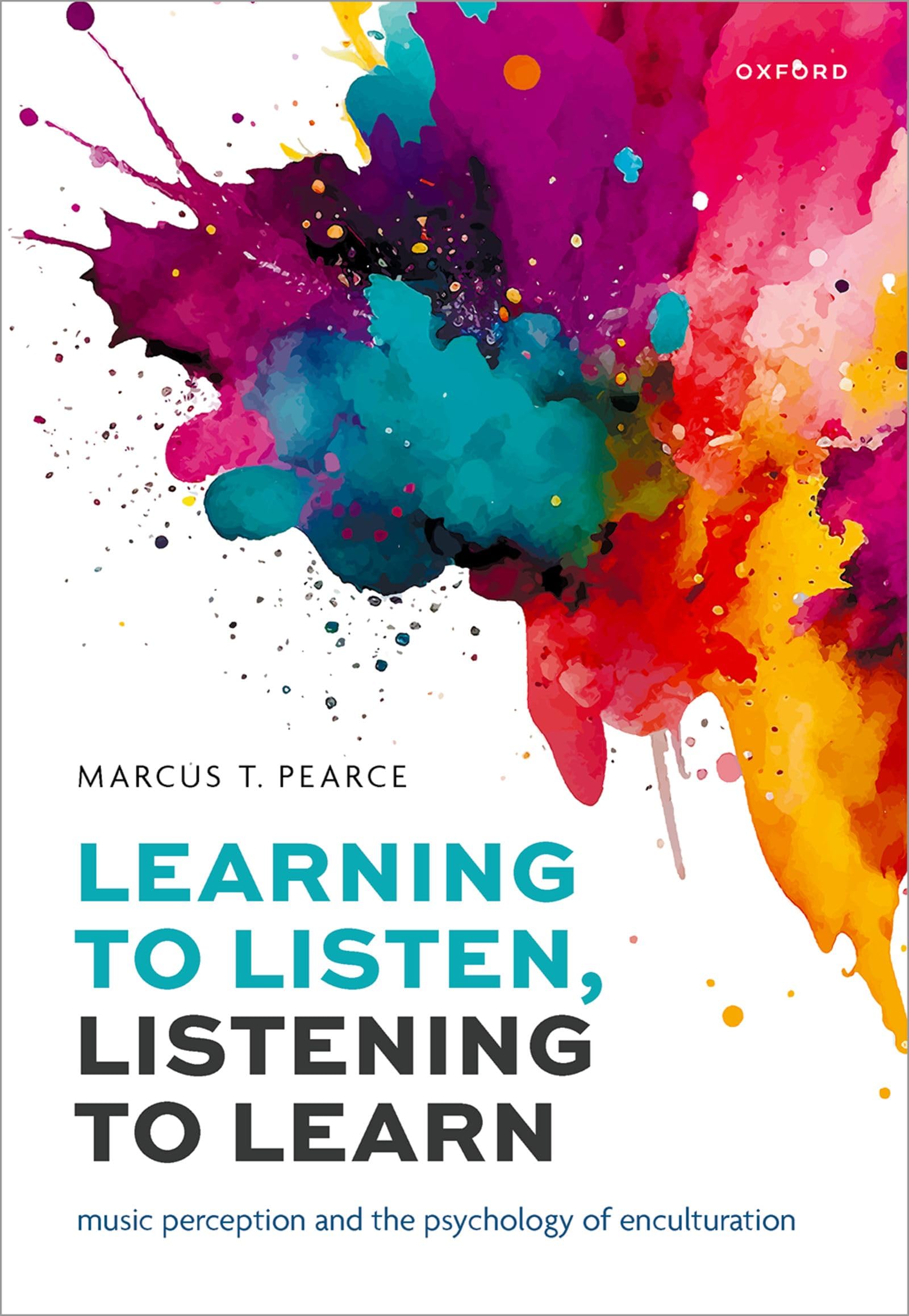
Learning to Listen, Listening to Learn: Music Perception and the Psychology of Enculturation
by Marcus T. Pearce
Sponsored
Synopsis
What accounts for the variety of music witnessed across the world? The answer lies in the psychological mechanisms of cultural evolution that combine a creative process of composing ever new forms of music and a perceptual process of learning to appreciate listening to them.
This book develops and ...
This book develops and ...
What accounts for the variety of music witnessed across the world? The answer lies in the psychological mechanisms of cultural evolution that combine a creative process of composing ever new forms of music and a perceptual process of learning to appreciate listening to them.
This book develops and tests a theory of the psychological mechanisms that enable listeners to learn the structure of their culturally-situated musical environments so as to be able to perceive and appreciate music. The central hypothesis is that music perception depends critically on mechanisms of statistical learning and probabilistic prediction. These mechanisms are implemented in a computational model whose behaviour is analysed in detail through simulations of psychological experiments. The results demonstrate that the model can account for predictions generated by listeners for the pitch, timing and harmonies of music. While prediction is an important psychological mechanism in and of itself, the evidence presented shows how it also lays the foundation for a broader account of music perception, encompassing memory, auditory scene analysis, similarity perception, complexity perception, affect and aesthetic experience.
The proposed theory makes concrete predictions for differences in perception between listeners from different cultures and the developmental trajectories that result in these differences. These predictions are tested and corroborated with respect to both the incidental cultural experience of non-musicians and the formal cultural training of musicians. Because the approach rests fundamentally on mechanisms of statistical learning, it generalises naturally to other cultural domains including natural language, visual media and dance.
You May Also Like

Constructing Grounded Theory (Introducing Qualitative Methods series)
Kathleen Charmaz

Immortal Consequences: A Good Morning America YA Book Club Pick (The Souls of Blackwood Academy 1)
I. V. Marie
Tre essyas om konservatisme
Lars Roar Langslet

The Leopard
Jo Nesbø

Cook Like a King: Recipes from My California Chinese Kitchen
Melissa King

Wolf Hall Companion
Lauren Mackay