1
0
Support the library.
Your support helps keep books free for everyone ❤️
📍 Noticed
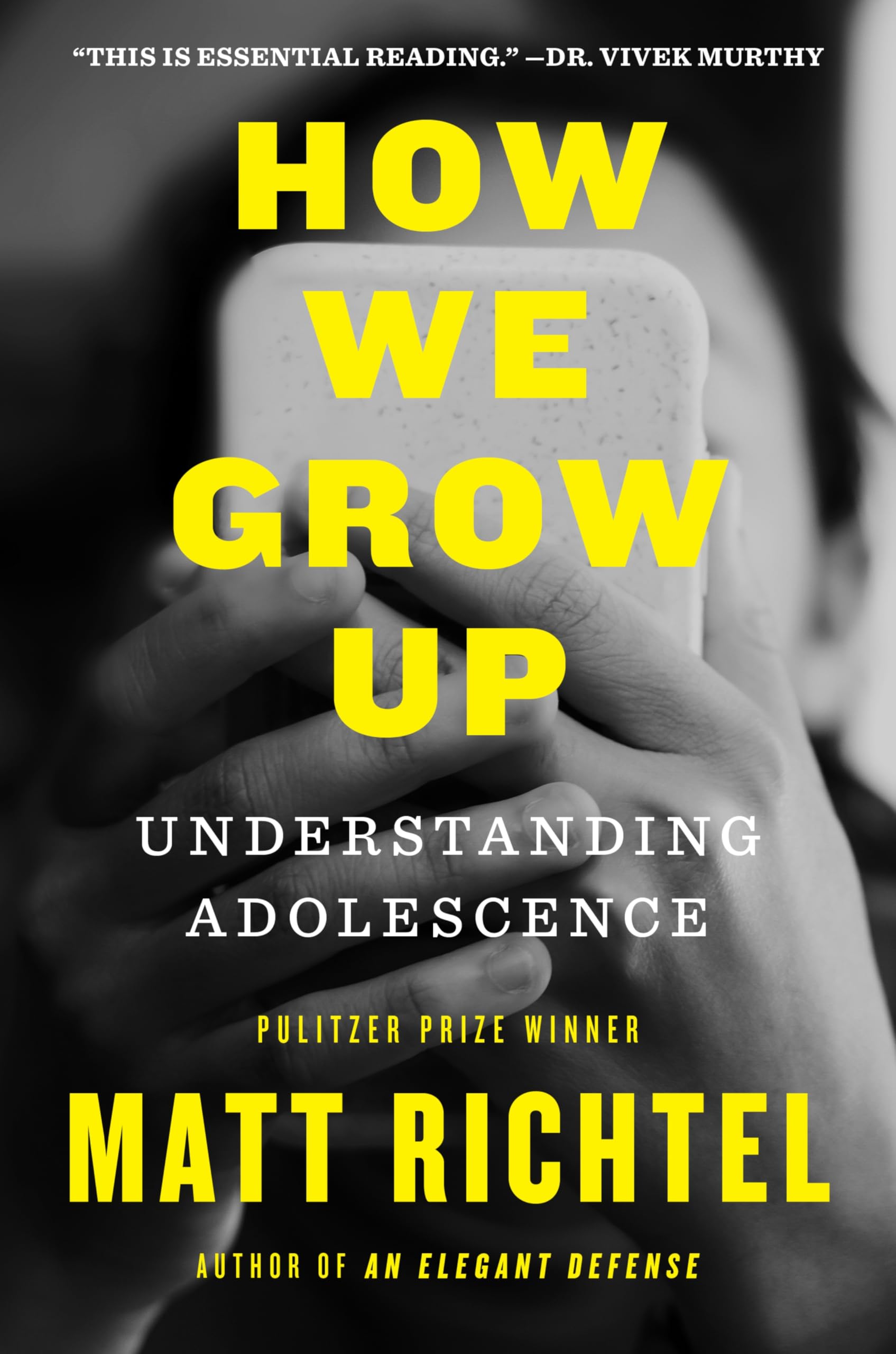
How We Grow Up: Understanding Adolescence—A Must-Read for Parents and Anyone Who Cares for Teens and Young Adults, by the Pulitzer Prize-winning NYT reporter
by Matt Richtel
Sponsored
Synopsis
"This is essential reading for parents." — Dr. Vivek Murthy, former U.S. Surgeon General
Greatly expanding his award-winning New York Times series on the contemporary teen mental-health crisis, Pulitzer Prize–winning science reporter Matt Richtel delivers a groundbreaking investigation into ...
Greatly expanding his award-winning New York Times series on the contemporary teen mental-health crisis, Pulitzer Prize–winning science reporter Matt Richtel delivers a groundbreaking investigation into ...
"This is essential reading for parents." — Dr. Vivek Murthy, former U.S. Surgeon General
Greatly expanding his award-winning New York Times series on the contemporary teen mental-health crisis, Pulitzer Prize–winning science reporter Matt Richtel delivers a groundbreaking investigation into adolescence, the pivotal life stage undergoing profound—and often confounding—transformation.
One of The New Yorker's Best Books of 2025
The transition from childhood to adulthood is a natural, evolution-honed cycle that now faces radical change and challenge. The adolescent brain, sculpted for this transition over eons of evolution, confronts a modern world that creates so much social pressure as to regularly exceed the capacities of the evolving mind. The problem comes as a bombardment of screen-based information pelts the brain just as adolescence is undergoing a second key change: puberty is hitting earlier. The result is a neurological mismatch between an ultra-potent environment and a still-maturing brain that can lead to anxiety, depression, and other mental health challenges. It is a crisis that is part of modern life but can only be truly grasped through a broad, grounded lens of the biology of adolescence itself. Through this lens, Richtel shows us how adolescents can understand themselves, and parents and educators can better help.
For decades, this transition to adulthood has been defined by hormonal shifts that trigger the onset of puberty. But Richtel takes us where science now understands so much of the action is: the brain. A growing body of research that looks for the first time into budding adult neurobiology explains with untold clarity the emergence of the “social brain,” a craving for peer connection, and how the behaviors that follow pave the way for economic and social survival. This period necessarily involves testing—as the adolescent brain is programmed from birth to take risks and explore themselves and their environment—so that they may be able to thrive as they leave the insulated care of childhood.
Richtel, diving deeply into new research and gripping personal stories, offers accessible, scientifically grounded answers to the most pressing questions about generational change. What explains adolescent behaviors, risk-taking, reward-seeking, and the ongoing mental health crisis? How does adolescence shape the future of the species? What is the nature of adolescence itself?
You May Also Like

A Cyborg for the Alien Mercenary
Mina Carter

The One and Only Ivan: A Newbery Award Winner
Katherine Applegate

Acne
Laura Chinn

Ignore All Previous Instructions
Ada Hoffmann

The Better Angels of Our Nature: Why Violence Has Declined
Steven Pinker

Demand Driven Material Requirements Planning (DDMRP): Version 3
Carol Ptak
Biography Picks
View All
Fly, Wild Swans: My Mother, Myself and China
Jung Chang

The Pursued
Corey Mead

L'Effondrement
Édouard Louis

Moi, Fadi, le frère volé, 1986-1994
Riad Sattouf

The Tower and the Ruin: J.R.R. Tolkien's Creation
Michael D. C. Drout

The Einstein Vendetta: Hitler, Mussolini, and a True Story of Murder
Thomas Harding
