0
0
Support the library.
Your support helps keep books free for everyone ❤️
📍 Noticed
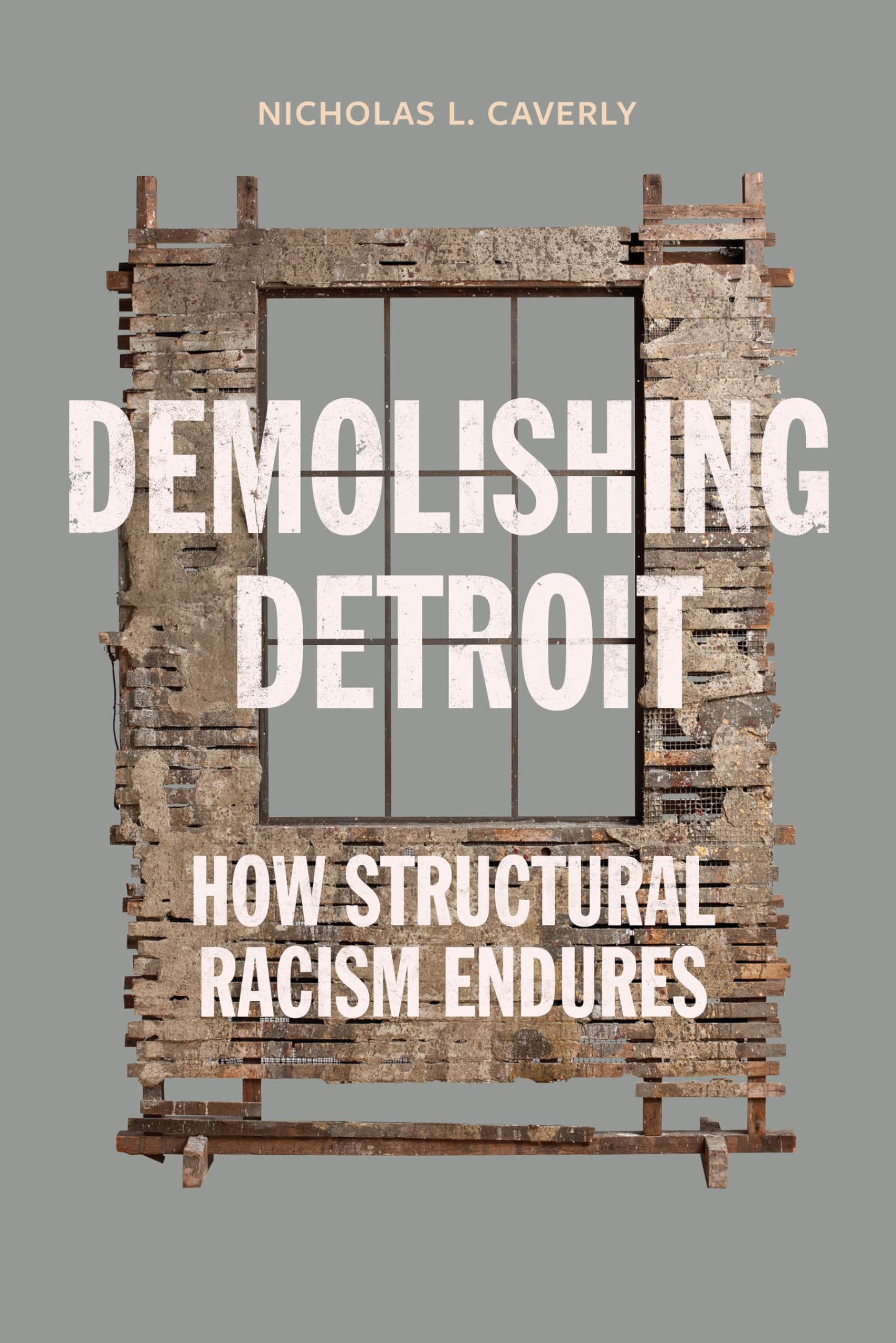
Demolishing Detroit: How Structural Racism Endures
by Nicholas L. Caverly
Sponsored
Synopsis
Innovative field work reveals how infrastructural systems—buildings, laws, algorithms, excavators, regulations, toxins—maintain white supremacy within the urban landscape
For decades, Detroit residents, politicians, planners, and advocacy organizations have campaigned for the elimination of ...
For decades, Detroit residents, politicians, planners, and advocacy organizations have campaigned for the elimination of ...
Innovative field work reveals how infrastructural systems—buildings, laws, algorithms, excavators, regulations, toxins—maintain white supremacy within the urban landscape
For decades, Detroit residents, politicians, planners, and advocacy organizations have campaigned for the elimination of empty buildings from city neighborhoods. Leveling these structures, many argue, is essential to making space for Detroit's majority-Black populace to flourish in the wake of white flight and deindustrialization. In 2013, the city set out to demolish more than twenty thousand empty buildings by the end of the decade, with administrators suggesting it would offer an innovative model for what other American cities could do to combat the effects of racist disinvestment. Drawing on extensive ethnographic research with city residents, demolition workers, and public officials, as well as analyses of administrative archives, Demolishing Detroit examines the causes, procedures, and consequences of empty-building demolitions in Detroit. Contrary to stated goals of equity, the book reveals how racism and intersecting inequities endured despite efforts to level them.
As calls to dismantle racist systems have become increasingly urgent, this book provides cautionary tales of urban transformations meant to combat white supremacy that ultimately reinforced inequality. Bridging political analyses of racial capitalism, infrastructures, and environments in cities, Nick Caverly grapples with the reality that tearing down unjust policies, ideologies, and landscapes is not enough to end racist disparities in opportunities and life chances. Doing so demands rebuilding systems in the service of reparative futures.
You May Also Like

A Storm of Silver and Ash
Marion Blackwood

The Djinn in the Nightingale's Eye: Five Fairy Stories
A.S. Byatt

The Popular History of Graffiti: From the Ancient World to the Present
Fiona McDonald

The Black Moon
Winston Graham

Good Soil: The Education of an Accidental Farmhand
Jeff Chu

Quantum History: A New Materialist Philosophy
Slavoj Žižek