1
0
Support the library.
Your support helps keep books free for everyone ❤️
📍 Noticed
Byzantium: Faith and Power (1261–1557)
by Helen C. Evans
Sponsored
Synopsis
The fall of the Byzantine capital of Constantinople to the Latin West in 1204 during the Fourth Crusade abruptly interrupted nearly nine hundred years of artistic and cultural traditions. In 1261, however, the Byzantine general Michael VIII Palaiologos triumphantly re-entered Constantinople and ...
The fall of the Byzantine capital of Constantinople to the Latin West in 1204 during the Fourth Crusade abruptly interrupted nearly nine hundred years of artistic and cultural traditions. In 1261, however, the Byzantine general Michael VIII Palaiologos triumphantly re-entered Constantinople and reclaimed the seat of the empire, initiating a resurgence of art and culture that would continue for nearly three hundred years, not only in the waning empire itself but also among rival Eastern Christian nations eager to assume its legacy. Byzantium: Faith and Power (1261–1557), and the groundbreaking exhibition that it accompanies, explores the artistic and cultural flowering of the last centuries of the "Empire of the Romans" and its enduring heritage.
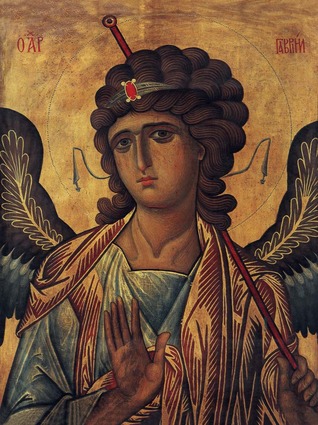
Conceived as the third of a trio of exhibitions dedicated to a fuller understanding of the art of the Byzantine Empire, whose influence spanned more than a millennium, "Byzantium: Faith and Power (1261–1557)" followed the 1997 landmark presentation of "The Glory of Byzantium," which focused on the art and culture of the Middle Byzantine era—the Second Golden Age of the Byzantine Empire (843–1261). In the late 1970s, "The Age of Spirituality" explored the early centuries of Byzantium's history. The concluding segment "Byzantium: Faith and Power (1261–1557)" explored the exceptional artistic accomplishments of an era too often considered in terms of political decline. Magnificent works—from splendid frescoes, textiles, gilded metalwork, and mosaics to elaborately decorated manuscripts and liturgical objects—testify to the artistic and intellectual vigor of the Late and post-Byzantine eras. In addition, forty magnificent icons from the Holy Monastery of Saint Catherine, Sinai, Egypt, join others from leading international institutions in a splendid gathering of these powerful religious images.
While the political strength of the empire weakened, the creativity and learning of Byzantium spread farther than ever before. The exceptional works of secular and religious art produced by Late Byzantine artists were emulated and transformed by other Eastern Christian centers of power, among them Russia, Serbia, Bulgaria, and Cilician Armenia. The Islamic world adapted motifs drawn from Byzantium's imperial past, as Christian minorities in the Muslim East continued Byzantine customs. From Italy to the Lowlands, Byzantium's artistic and intellectual practices deeply influenced the development of the Renaissance, while, in turn, Byzantium's own traditions reflected the empire's connections with the Latin West. Fine examples of these interrelationships are illustrated by important panel paintings, ceramics, and illuminated manuscripts, among other objects. In 1557 the "Empire of the Romans," as its citizens knew it, which had fallen to the Ottoman Turks in 1453, was renamed Byzantium by the German scholar Hieronymus Wolf.
The cultural and historical interaction and mutual influence of these major cultures—the Latin West and the Christian and Islamic East—during this fascinating period are investigated in this publication by a renowned group of international scholars in seventeen major essays and catalogue discussions of more than 350 exhibited objects. [This book was originally published in 2004 and has gone out of print. This edition is a print-on-demand version of the original book.]
You May Also Like

Escape the Pizzaplex (Five Nights at Freddy's Interactive Novel #3)
Scott Cawthon

Respect for Acting
Uta Hagen

Gluten-Free Cookbook for Beginners: 100 Essential Recipes to Go Gluten-Free
Jessica Kirk

Hans Ulrich Obrist & Zaha Hadid: The Conversation Series: Vol. 8
Hans Ulrich Obrist

Another Logic Workbook for Gritty Kids: Spatial Reasoning, Math Puzzles, Word Games, Logic Problems, Focus Activities, Two-Player Games. (Develop ... & STEM Skills in Kids Ages 8, 9, 10, 11, 12.)
Dan Allbaugh

Father Material
Alexis Hall
Religion Picks
View All
Build the Life You Want: The Art and Science of Getting Happier
Arthur C. Brooks
El loco de Dios en el fin del mundo
Javier Cercas

Now and Not Yet: Pressing in When You’re Waiting Wanting and Restless for More
Ruth Chou Simons

Confessions of an Alleged Good Girl
Joya Goffney
Beyond Order: 12 More Rules For Life
Jordan B. Peterson
Separation of Church and Hate: A Sane Person's Guide to Taking Back the Bible from Fundamentalists, Fascists, and Flock-Fleecing Frauds
John Fugelsang
