1
0
Support the library.
Your support helps keep books free for everyone ❤️
📍 Noticed
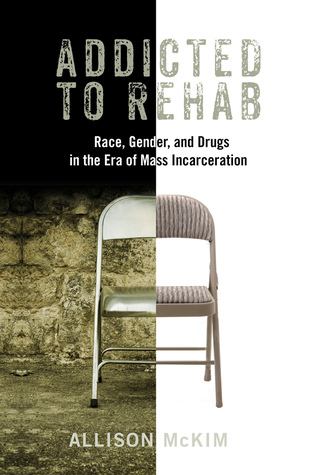
Addicted to Rehab: Race, Gender, and Drugs in the Era of Mass Incarceration (Critical Issues in Crime and Society)
by Allison McKim
Sponsored
Synopsis
After decades of the American “war on drugs” and relentless prison expansion, political officials are finally challenging mass incarceration. Many point to an apparently promising solution to reduce the prison population: addiction treatment. In Addicted to Rehab, Bard ...
After decades of the American “war on drugs” and relentless prison expansion, political officials are finally challenging mass incarceration. Many point to an apparently promising solution to reduce the prison population: addiction treatment.
In Addicted to Rehab, Bard College sociologist Allison McKim gives an in-depth and innovative ethnographic account of two such rehab programs for women, one located in the criminal justice system and one located in the private healthcare system—two very different ways of defining and treating addiction. McKim’s book shows how addiction rehab reflects the race, class, and gender politics of the punitive turn. As a result, addiction has become a racialized category that has reorganized the link between punishment and welfare provision. While reformers hope that treatment will offer an alternative to punishment and help women, McKim argues that the framework of addiction further stigmatizes criminalized women and undermines our capacity to challenge gendered subordination. Her study ultimately reveals a two-tiered system, bifurcated by race and class.
In Addicted to Rehab, Bard College sociologist Allison McKim gives an in-depth and innovative ethnographic account of two such rehab programs for women, one located in the criminal justice system and one located in the private healthcare system—two very different ways of defining and treating addiction. McKim’s book shows how addiction rehab reflects the race, class, and gender politics of the punitive turn. As a result, addiction has become a racialized category that has reorganized the link between punishment and welfare provision. While reformers hope that treatment will offer an alternative to punishment and help women, McKim argues that the framework of addiction further stigmatizes criminalized women and undermines our capacity to challenge gendered subordination. Her study ultimately reveals a two-tiered system, bifurcated by race and class.
You May Also Like

The Rise and Fall of the Great Powers: Economic Change and Military Conflict from 1500 to 2000
Paul Kennedy

As the Crow Flies
Jeffrey Archer

Cranky Uncle vs. Climate Change: How to Understand and Respond to Climate Science Deniers
John Cook

The Singing Wilderness
Sigurd F. Olson

Scotland's Geomythography: Myth, landscape and the roots of culture
Stuart McHardy

Prosper: Major Suttill's French Resistance Network (Espionage)
Francis J Suttill
Biography Picks
View All
You Never Know: A Memoir
Tom Selleck

When Gavin Met Stacey and Everything in Between
Ruth Jones

The Tragedy of True Crime: Four Guilty Men and the Stories That Define Us
John J. Lennon

Medgar & Myrlie: Medgar Evers and the Love Story that Awakened America
Joy-Ann Reid

Be Useful: Seven Tools for Life
Arnold Schwarzenegger

Bad Mormon: A Memoir
Heather Gay
