0
0
Support keeps this going.
If you find value here, a small tip makes a big difference ❤️
📍 Noticed
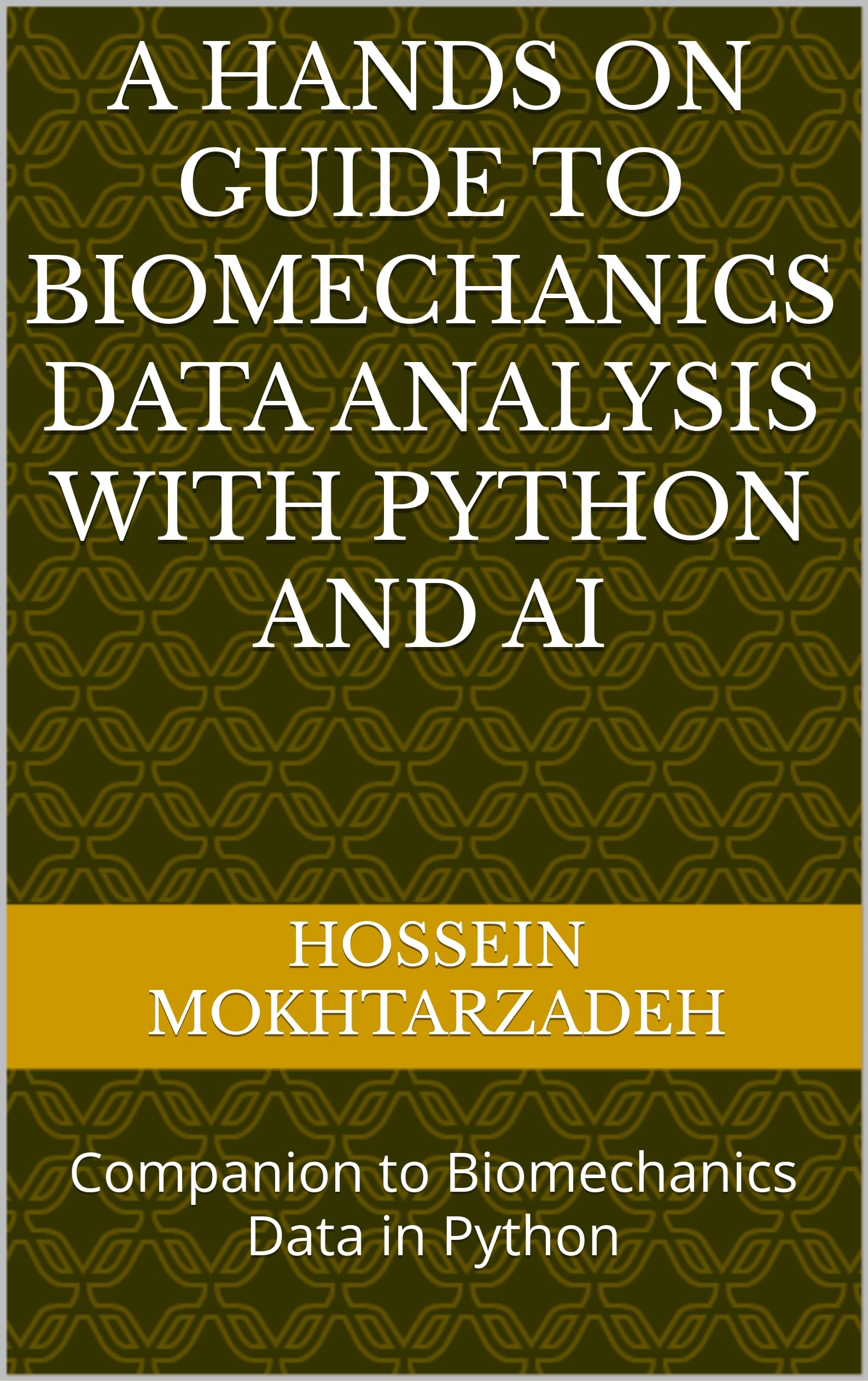
A Hands On Guide to Biomechanics Data Analysis with Python and AI: Companion to Biomechanics Data in Python (AI Mastery Series)
by Hossein Mokhtarzadeh
Sponsored
Synopsis
A complete, hands-on guide to biomechanics data analysis using Python, Google Colab, and modern AI tools.
Whether you’re a student, clinician, coach, researcher, or engineer, this book gives you a clear, repeatable workflow for turning raw movement-capture files into insight-rich plots, metrics, ...
Whether you’re a student, clinician, coach, researcher, or engineer, this book gives you a clear, repeatable workflow for turning raw movement-capture files into insight-rich plots, metrics, ...
A complete, hands-on guide to biomechanics data analysis using Python, Google Colab, and modern AI tools.
Whether you’re a student, clinician, coach, researcher, or engineer, this book gives you a clear, repeatable workflow for turning raw movement-capture files into insight-rich plots, metrics, and reports — all using free or open tools.
What makes this book different?
It removes the friction. No expensive software, no complex setup, no scattered scripts. You learn a single, practical pipeline:
Input → Parse → Analyze → Visualize → Export
Every chapter is a mini-project with real examples, runnable Google Colab notebooks, and step-by-step code you can reuse immediately in your own work. You’ll work with C3D, CSV, TRC, OpenSim formats, force-plate data, gait cycles, filtering, event detection, symmetry metrics, and more.
Inside you’ll learn how to:
Load and inspect C3D, TRC, CSV, and other common biomechanics formats
Extract markers, GRFs, metadata, and analog channels using Python
Clean and normalize signals (units, filtering, alignment)
Detect gait events and compute practical metrics used in real labs
Build clear, defensible plots for research, clinics, and coaching
Export tidy reports (CSV + HTML) for sharing or publication
Use AI tools (e.g., ChatGPT) to speed up code generation and debugging
Understand the bridge between MoCap data and musculoskeletal/ML models
Who is this for?
Biomechanists, physiotherapists, sports scientists, coaches, biomedical engineers, researchers, students, AI/ML beginners in human movement science — and anyone who wants to get usable insights from motion and force data without overcomplicating the process.
Why Python & Google Colab?
Completely free
No installation or setup
Cloud-based and shareable
Perfect for fast hypotheses and reproducible research
Ideal for teams, teaching, and scalable pipelines
What you get:
25+ ready-to-run Colab notebooks
A full beginner-friendly tour of C3D structure
Clean, reusable snippets you’ll use daily
Lightweight PoseIQ™ tools for exploring biomechanics data
A foundation for machine learning, modeling, and automated workflows
If you can open a notebook, you can analyze motion-capture data.
This book shows you exactly how.
You May Also Like

YOU GOT GOLD: A CELEBRATION OF JOHN PRINE: A Tribute to John Prine: Celebrating the Life and Legacy of a Legendary Songwriter
ARLO WESTON

The German Empire, 1871–1918
Roger Chickering

X-Men By Marc Guggenheim Omnibus (X-Men Gold (2017-2018))
Marc Guggenheim

Stay for Christmas: A Sunrise Bay Prequel
Serenity Woods

Dreamworld: Surrealism at 100
Matthew Affron

Writ at Large: A legal life well-rounded
Fahri Azzat